
Most advice says to save 10 per cent of your income. I aim higher, because I want the option to stop working early. But the exact percentage matters less than one simple rule: whatever you decide to save should move automatically, before you have the chance to spend it.
Automation takes willpower out of the equation. It saves you a monthly decision you might get wrong, it smooths out your investing (buying at regular intervals, whatever the market is doing), and it's one less thing to remember. Pay yourself first, and budget with what's left.
Start at work
The easiest place to begin is any savings plan your employer offers, often a group RRSP, a group TFSA or a pension. Many employers match part of your contributions, which is an instant return you won't find anywhere else, and group plans usually have lower fees than retail mutual funds. The money comes off your paycheque before it reaches your bank account, so you never get used to spending it. If your contributions are a percentage of pay, they rise automatically when you get a raise.
Check what funds you're in. A target-date fund, which slowly shifts from growth to safety as retirement approaches, is one common set-and-forget choice. Look for low fees.
Then automate the rest
For everything else, set up automatic transfers timed for the day after payday: one to your emergency fund until it's full, one to a TFSA, RRSP or FHSA, and one for each goal you're saving towards. Many brokerages and robo-advisors can invest the money automatically when it arrives. If you invest yourself, a single all-in-one asset allocation ETF keeps things simple: one fund, already diversified and rebalanced for you.
Use your contribution room
Tax-sheltered accounts do a lot of the work for you, so try to use your room. A simple approach is to divide the room you want to use this year by the number of paydays. If you had $7,000 of TFSA room, for example, that's about $270 each biweekly paycheque. You can check your TFSA, RRSP and FHSA room in your CRA My Account.
Keep an eye on it without micromanaging
Automatic doesn't mean invisible. Once or twice a year, raise your contributions, especially after a raise, and make sure nothing has quietly stopped. And keep an eye on whether the transfers still fit: saving so aggressively that you end up on a credit card before payday defeats the purpose.
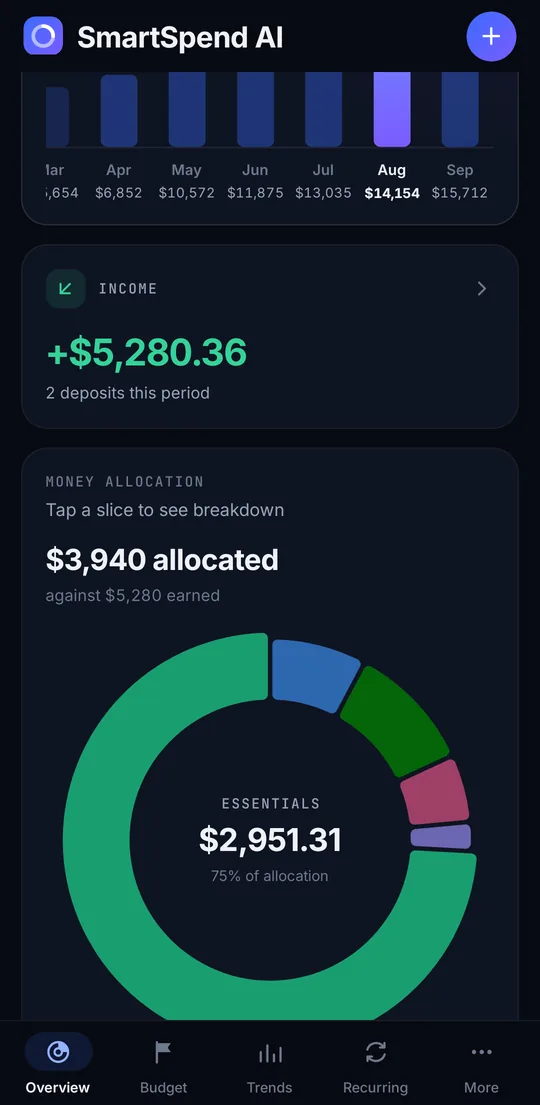
SmartSpend AI helps with both sides of that. It works out a monthly amount for each savings goal you set, fits it into your budget, and checks your statements for the transfers that show you're on track, while the safe-to-spend number makes sure your automatic savings never leave you short before payday.
Comments
Comment submissions will be available soon. In the meantime, you can reach out directly by email.