
Most budgeting advice asks you to watch your money every day. Plenty of people try it, keep it up for a few weeks and quietly stop. A monthly review asks far less: one sitting, the same five questions and one decision at the end. It's small enough to keep doing, and doing it every month matters more than doing it perfectly.
Pick your day
Choose a day a few days after your credit card statement closes, so the month's numbers are final, and make it a repeating appointment in your calendar. Have last month's statements for every account and card open, or your tracking spreadsheet if you keep one.
1. Where did it go?
Look at spending by category and compare it with the month before. Don't audit every line; find the two biggest changes. A jump in groceries might be prices. A jump in eating out might be a busy month. You're looking for what changed, not for things to feel bad about.
2. What repeats?
Scan for the charges that come every month: subscriptions, phone, insurance, memberships. Is anything new? Has anything gone up? Recurring bills rarely jump. They creep up a few dollars at a time, and the monthly review is where you catch it.
3. Am I getting ahead?
Add up the cash in all your bank accounts and subtract what you owe on your credit cards, then compare it with last month. That one number, free cash, tells you whether you're moving forward even when your chequing balance says otherwise. While you're there, note how many months your cash would cover your essentials if your income stopped.
4. What's coming up?
List the bills due before your next review, including the ones that don't come every month: annual renewals, insurance, property tax, a vehicle registration. Then find the lowest your balance will reach before your next paycheque, because your bank balance isn't your spending money when rent and card payments are still to come out.
5. What's the one thing I'll do?
End with one decision, not a list. Cancel a subscription. Ask to move a bill's due date so it lands after payday. Put an extra $100 on the card with the highest rate. Write it down, and make it the first thing you check next month.
Write a three-line summary
Finish with three sentences: where you stand, what changed since last month and what you're doing about it. It takes a minute, and it turns a pile of numbers into something you'll remember. Read last month's summary before you start the next review and you'll see your progress in your own words.
The shortcut
Most of the fifteen minutes is arithmetic: sorting, adding and comparing. SmartSpend AI does that from the statements you upload. Its month-by-month view shows where each month's money went and how your spending is trending, the recurring-charges list flags price increases, and free cash, months of cover and what's due next are worked out for you.
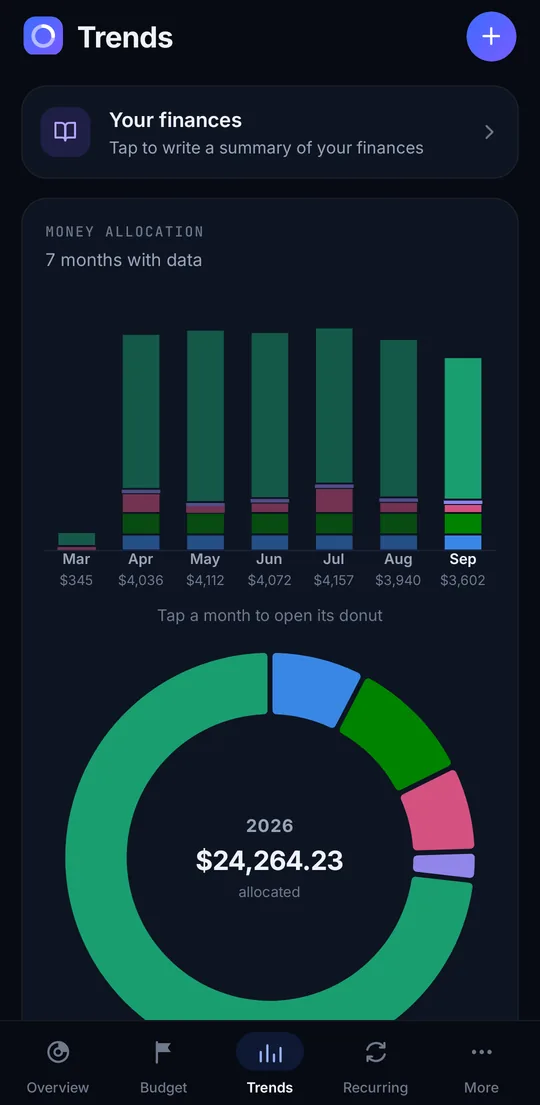
It also writes a short summary of where you stand and what's changed, built only from your own figures and honest about what it can't know. That leaves the part only you can do: reading it and making the one decision.
Comments
Comment submissions will be available soon. In the meantime, you can reach out directly by email.