It's hard to build wealth while you're paying 20 per cent interest on a credit card. Every dollar of high-interest debt you carry works against you as fast as a good investment works for you. That's why paying it off comes before almost everything else.
When I say debt here, I don't mean a mortgage at a reasonable rate. I mean credit card balances, payday loans, high-interest personal loans and any other debt where the rate is well above what you could reasonably expect to earn by investing. Treat that kind of debt as a financial emergency. But it's a fixable one, and you don't need to be perfect to fix it.
Step 1: Stop adding to it
You can't dig out of a hole while you're still digging. Take the card you're paying down out of your wallet and remove it from your phone and your favourite shopping sites. Use debit, or a card you pay in full every month, for everyday spending.
If the debt came from a gap between income and expenses, that gap has to close, either by spending less or earning more. A credit card can't fix an income shortfall; it only makes it more expensive.
Step 2: Keep a small buffer
It's tempting to throw every dollar at the debt, but without a small cushion the next car repair goes straight back on the card. Set aside a starter buffer, even $1,000, before you start aggressive payments. Build the full emergency fund once the high-interest debt is gone.
Step 3: Pick an order
Pay the minimum on everything, then put every extra dollar on one debt at a time. Paying the highest interest rate first (the avalanche method) saves the most money. Paying the smallest balance first (the snowball method) gives you quicker wins, which can keep you motivated. Either works far better than spreading extra payments thinly across everything.
Step 4: Lower the rate
Ask your card issuer for a lower rate. It doesn't always work, but it costs nothing to ask. Balance transfer offers can give you a low promotional rate for several months, but watch for transfer fees, usually a few per cent of the balance, and have a plan to clear the balance before the promotional period ends. Consolidating into a lower-rate line of credit or personal loan can also help, as long as you don't run the cards back up.
Step 5: Use a fixed payment and a date
Minimum payments shrink as your balance shrinks, which stretches repayment out for years. Choose a fixed monthly amount instead and set it up automatically. A $5,000 balance at around 21 per cent takes more than 20 years on 3 per cent minimum payments, but about two years at $250 a month. There's a full breakdown in Why your credit card balance never seems to go down.
Know when to get help
If the payments aren't manageable even after cutting back, a non-profit credit counsellor, which you can find through Credit Counselling Canada, can go through your options with you at little or no cost. It's a sensible step, not a failure.
Put a finish line on it
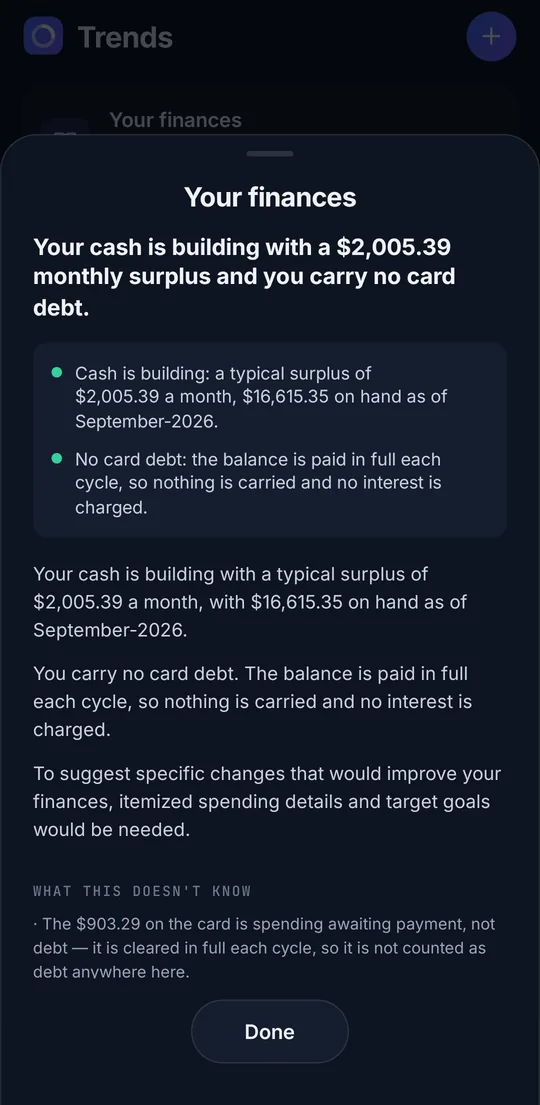
SmartSpend AI finds the card balances you actually carry in your statements, ignoring cards you already pay in full, and works out how many months each will take to clear with interest at your real monthly surplus. It puts your spare money on the most expensive debt first, then moves you on to building your emergency fund. Seeing the finish line is often what makes the plan stick.
Comments
Comment submissions will be available soon. In the meantime, you can reach out directly by email.